Sofiko Bigvava
Systems Strategist.
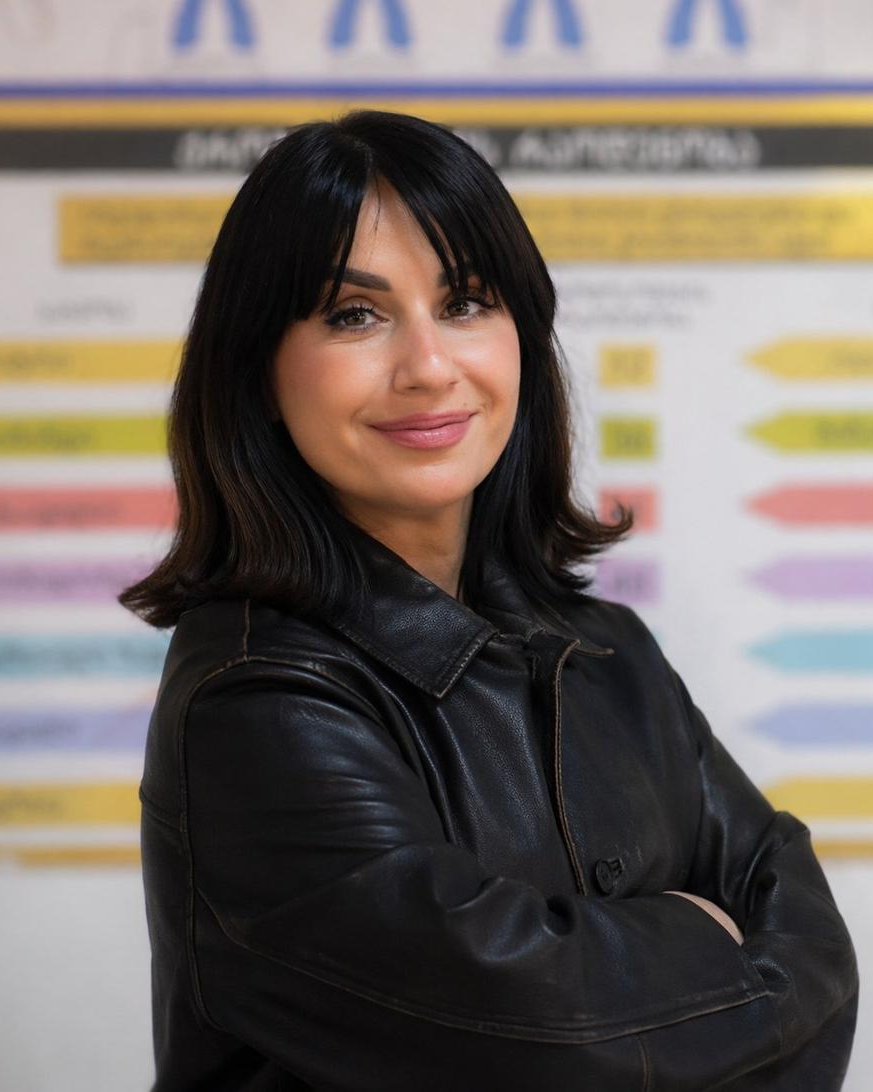
I build systems where people, experience, operations and technology have to work as one.
I am especially useful when a problem crosses functions and does not fit neatly inside one department. Often, an organisation has a strong idea, programme or product, but its purpose, experience, public language, processes and digital infrastructure have developed separately.
I take that whole problem and turn it into a coherent working system. Depending on the context, this can mean clarifying purpose and decision criteria; designing a programme, product or visitor or user experience; aligning public language; building team processes and operational workflows; shaping the digital infrastructure; using AI where it genuinely increases capacity; and staying responsible through implementation, verification and handover.
For more than ten years, I have helped build and lead Experimentorium Science Museum in Tbilisi, where I am Co-CEO responsible for Strategy & Education. The museum is the strongest proof of how I work: across programmes, visitor experience, partnerships, communications, operations, digital systems and the practical constraints of running a real institution. Education is one of the environments in which I work, not the boundary of the work itself.
AI is part of the system, not my profession. My value lies in deciding what should exist, how the parts should work together, what requires human judgment and responsibility, and whether the result works in real life.
For more than ten years, leading a science museum in a small country meant building many of the things a larger institution would hire a full team to build.
Each of these belonged to a different discipline. None of them came with a manual for an institution of our size, in our context, with our resources.
I learned to build them not as a designer, not as a marketer, and not only as a museum director — but as someone responsible for the whole system.
Over the last two years, AI became a working partner in that process. It did not replace the work of thinking. It expanded what one person could build, connect, test, and carry.
That is where my work comes from: real institutional responsibility, shaped by AI, but grounded in human judgment.
I believe many organisations with strong ideas are under-built as systems.
Not because they lack ambition.
Not because the people inside them lack capability.
But because the tools for building them coherently, end to end, with a small team, were not truly available until very recently.
They are available now.
My work is to help institutions use them — without losing what made them worth building in the first place.
My current work includes an operating institution, a new programme and research into human judgment in AI-mediated systems. They are different expressions of the same capability, not the boundaries of my practice.
Girls Who Change the World™ is an education programme for girls aged 10–14, built around women who changed science, technology, medicine, and the planet — beginning with its Founding Cohort in Tbilisi and designed to travel through local partners.
The Human Intelligence Method™ is a thinking-first educational framework for helping learners observe, question, attempt, verify, doubt, choose, explain, and take responsibility for their conclusions.
BIRTVA
Trust infrastructure for defended human judgment in the age of AI.
Across these projects, the recurring work is the same: defining what the system is for, what people need to experience or do, how operations and technology support that purpose, and what must remain under human judgment and responsibility.
I am based in Tbilisi, Georgia, and work in English, Georgian, and Russian.
My work is international in direction, but rooted in the reality of building from places that are often overlooked — smaller markets, smaller teams, and institutions with serious missions but limited infrastructure.
That is the kind of work I understand best.
If you are leading or building such an institution,
the conversation is usually worth having.