Case 01 · 2016 — present

Experimentorium

Georgia's only science museum, rebuilt as a modern educational institution.

Tbilisi, Georgia · Role: CEO & Architect
What I saw

Experimentorium was already Georgia's only science museum when I became its CEO. It had exhibits, visitors, and a team. What it did not have was coherence — between what it was, what it looked like, and how it operated.

Like many cultural institutions outside major cultural and funding centers, it had been built piece by piece, by hand. Over time, the pieces had stopped fitting together.

I also saw something larger: small institutions rarely get rebuilt by international consultants or design studios. If an institution is going to become modern, someone inside has to learn how to give it form.

What I built

Over nearly a decade, I rebuilt Experimentorium from the inside — as a public identity, an educational space, and an operating system.

I developed a new bilingual identity in Georgian and English, designed to meet the visual and communicative standards of contemporary science centres. I built the museum's website from scratch, reshaped its public language, and created a clearer visual system for social, print, and onsite communication.

I also worked on the deeper structure: educational programs based on inquiry rather than passive display, internal workflows for a small team, and AI-supported systems for content, scheduling, visitor communication, and message funnels.

The goal was never only to make the museum look better. It was to help it think, speak, and operate as one coherent institution.

What changed

Experimentorium began to read not as a local project, but as a modern educational institution — to visitors, partners, and its own team.

It became the first proof of my method: that small cultural and educational institutions can be rebuilt from within when vision, structure, and execution are held together.

Everything I now bring to other institutions, I learned by building this one first.
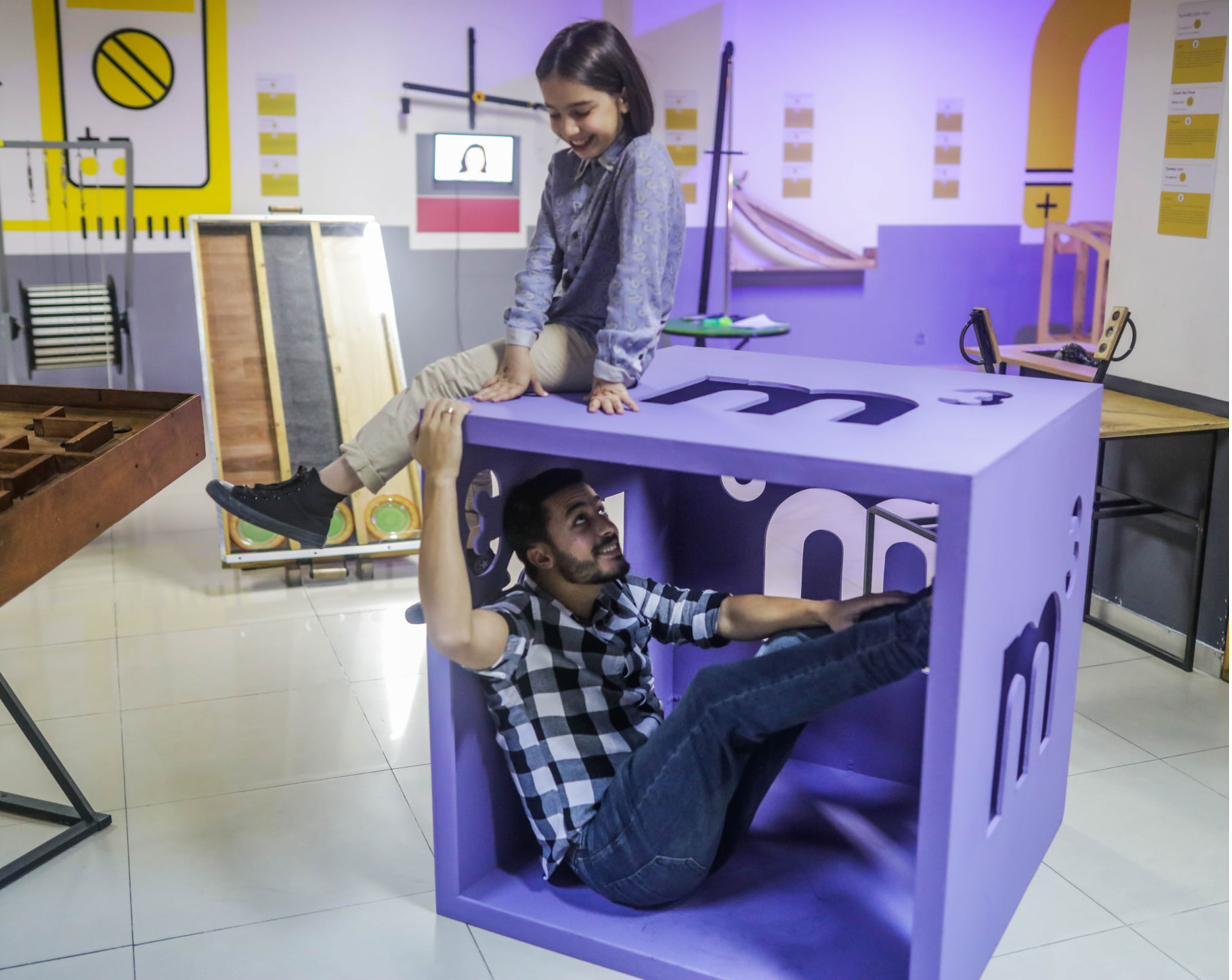
Inside Experimentorium: a child and a guide interacting with one of the museum's exhibits.
Inside the museum · Tbilisi
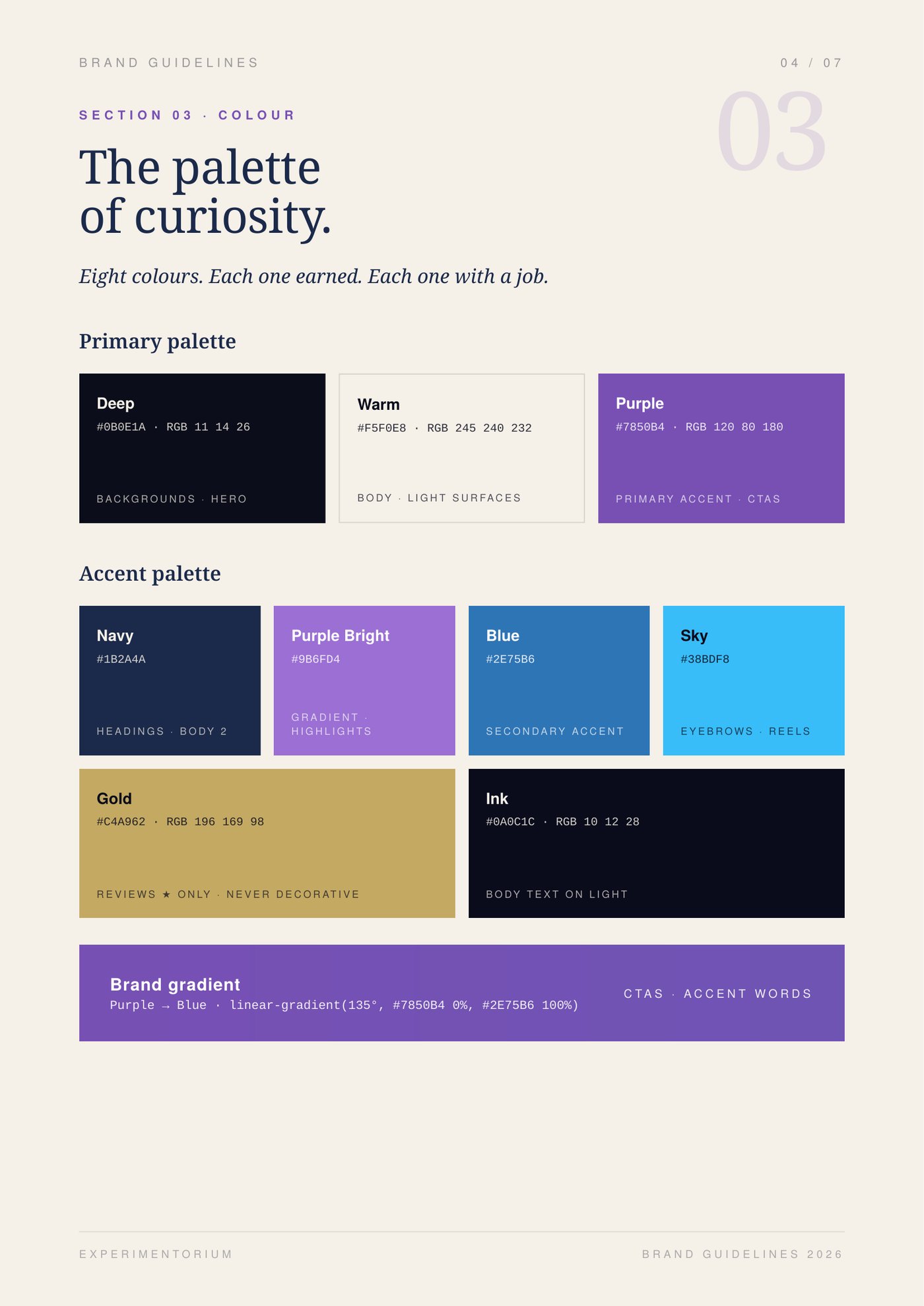
Experimentorium brand guidelines page: colour palette, gradients, and Georgian/English typography system.
Brand system · 2026 edition
Case 02 · 2026 →

Girls Who Change the World

An international education movement, designed from the ground up as a transferable system.

Founded 2026 · Founding Cohort opening Autumn 2026
What I saw

Programs for girls in science already existed. Many of them began as local initiatives, built around an enthusiastic founder, her energy, her network, and her city. They could be powerful, but they were often difficult to transfer. When the founder moved on, the structure often weakened. When the program left its original context, something essential could be lost.

I saw a second problem underneath the first. Many programs were built around the message "girls belong in STEM" — a message addressed to a perceived absence. But twelve-year-old girls do not respond to statistics about their underrepresentation. They respond to people. They respond to stories. They respond to becoming someone.

The gap was not motivational. It was structural.

There was no clear education model for girls aged 10–14 that combined identity formation through the real lives of women in science with a system designed from day one to travel — to other cities, other countries, and other cultures — without losing what made it work.

What I built

Girls Who Change the World is not a program. It is a transferable institution.

It is built across four seasons — Science, Technology, Medicine, and Planet — each centered on women who saw what others could not. Each cohort includes twelve girls, a scale small enough for identity formation and strong enough for belonging.

The model includes a long-term progression: participant, observer, mentor, guide, and lifetime member. A girl who enters at ten can return at twenty not as a former student, but as someone who shapes the program for the next generation.

I designed the full institutional architecture: the educational model and seasonal structure, the cohort and progression logic, and the complete identity system — from language and rituals to brand, member kits, badges, and naming conventions.

The licensing model is partner-based. Organizations in other countries can receive the full program kit, brand guidelines, training, and ongoing support — in exchange for a license fee and a commitment to quality.

The system is documented, reproducible, and designed to outlive its founder.

What changed

Girls Who Change the World now exists as a working architecture, ready to move beyond Tbilisi. The Founding Cohort opens in Autumn 2026, with the international partner framework built into the model from year one.

It shows what most education initiatives miss: that a movement for girls can scale globally without becoming generic.

It is also the clearest proof of my work as an Education Systems Architect: I build the structures movements need in order to exist beyond their founder.

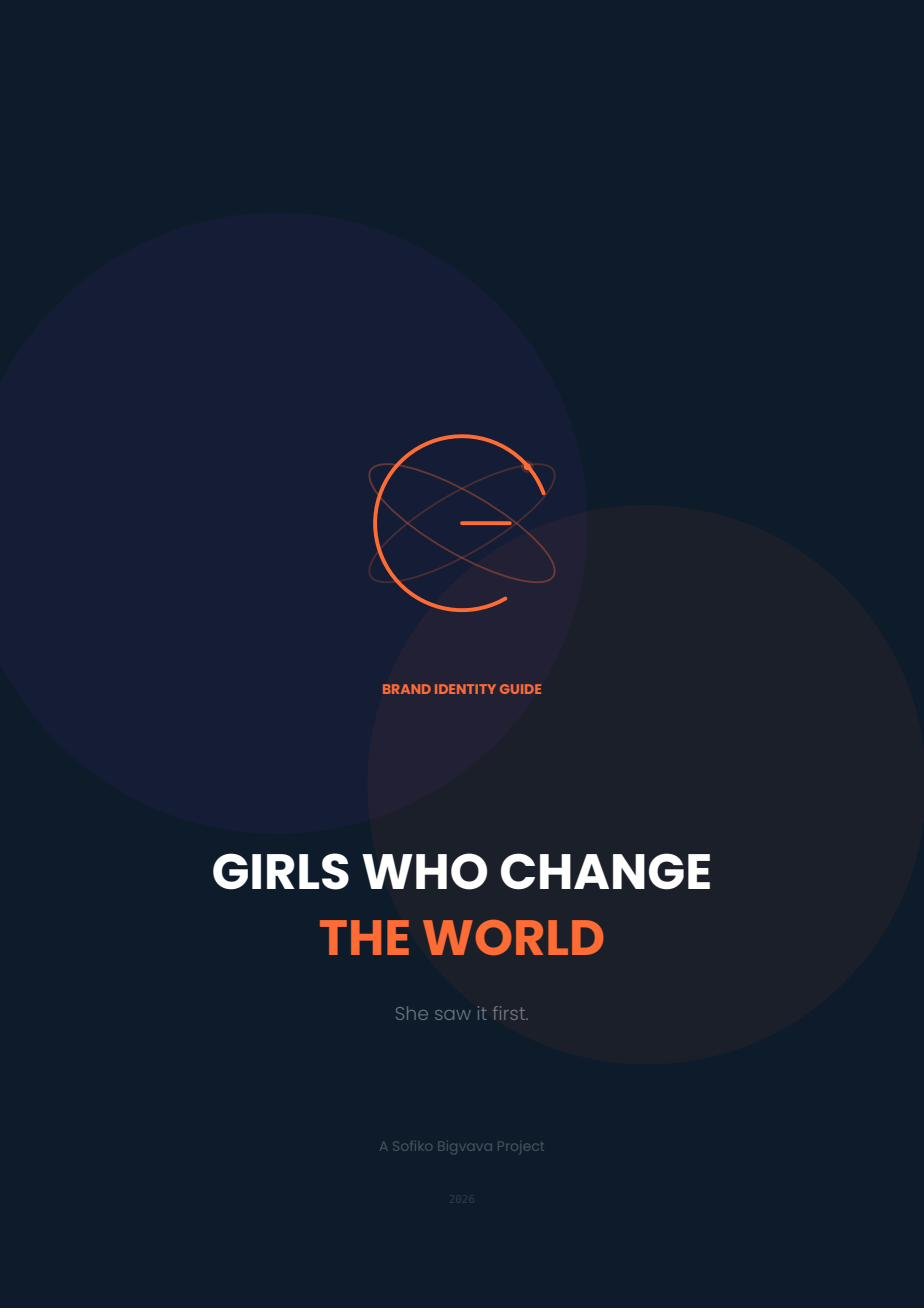
Girls Who Change the World — brand identity guide cover, featuring the Open Orbit symbol on deep navy.
Brand identity guide · cover
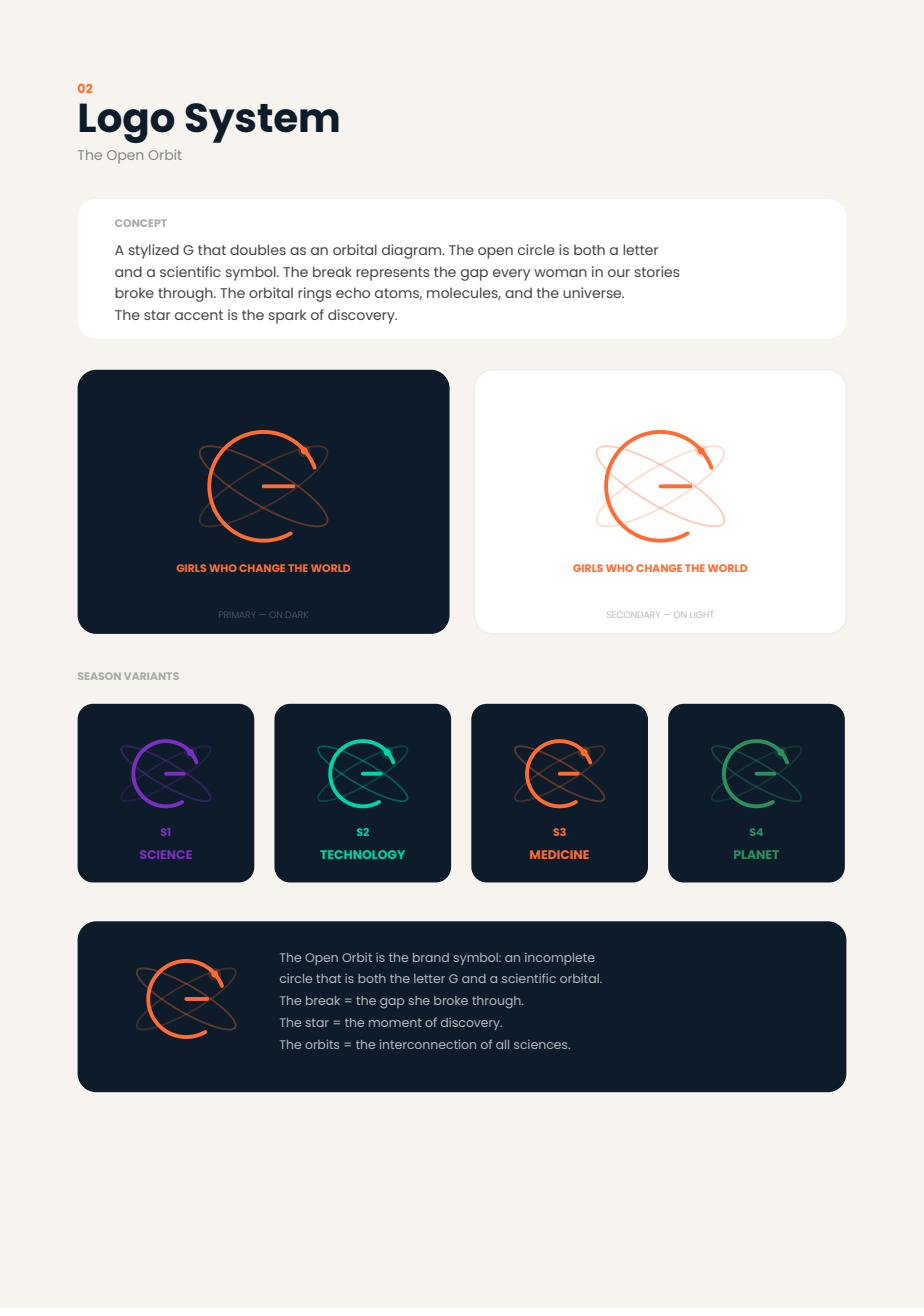
Girls Who Change the World — Open Orbit logo system with four season variants: Science, Technology, Medicine, Planet.
Logo system · four seasons
Case 03 · 2026 →

The Human Intelligence Method

A manifesto and practical method for educators in the age of AI.

Published 2026 · Founding Lab opening 2026
What I saw

The public conversation about AI in education had collapsed into two flat positions: ban it, because children will cheat, or embrace it, because this is the future.

Both sounded responsible. Neither was enough.

Underneath both positions was a quieter problem. After nearly a decade of watching children learn inside a science museum, I had seen something most policy conversations missed:

AI did not break education. It revealed where education was already weak.

A child who has been taught to think does not lose that capacity the moment a chatbot appears. A child who has only been trained to produce the right answer has very little to defend.

The crisis was not the machine. It was that education, in many of its forms, had become too focused on the production of artifacts — homework, essays, answers, presentations — and not focused enough on the development of thinking.

What was missing was not another warning about AI, and not another celebration of it. What was missing was a coherent position educators could stand on, and a practical method they could teach from.

What I built

The Human Intelligence Method is a manifesto and practical framework for educators teaching in the age of artificial intelligence.

It does not argue for or against AI. It argues for a redesign of learning so that a child's thinking remains visible, defensible, and truly their own.

The work has three layers.

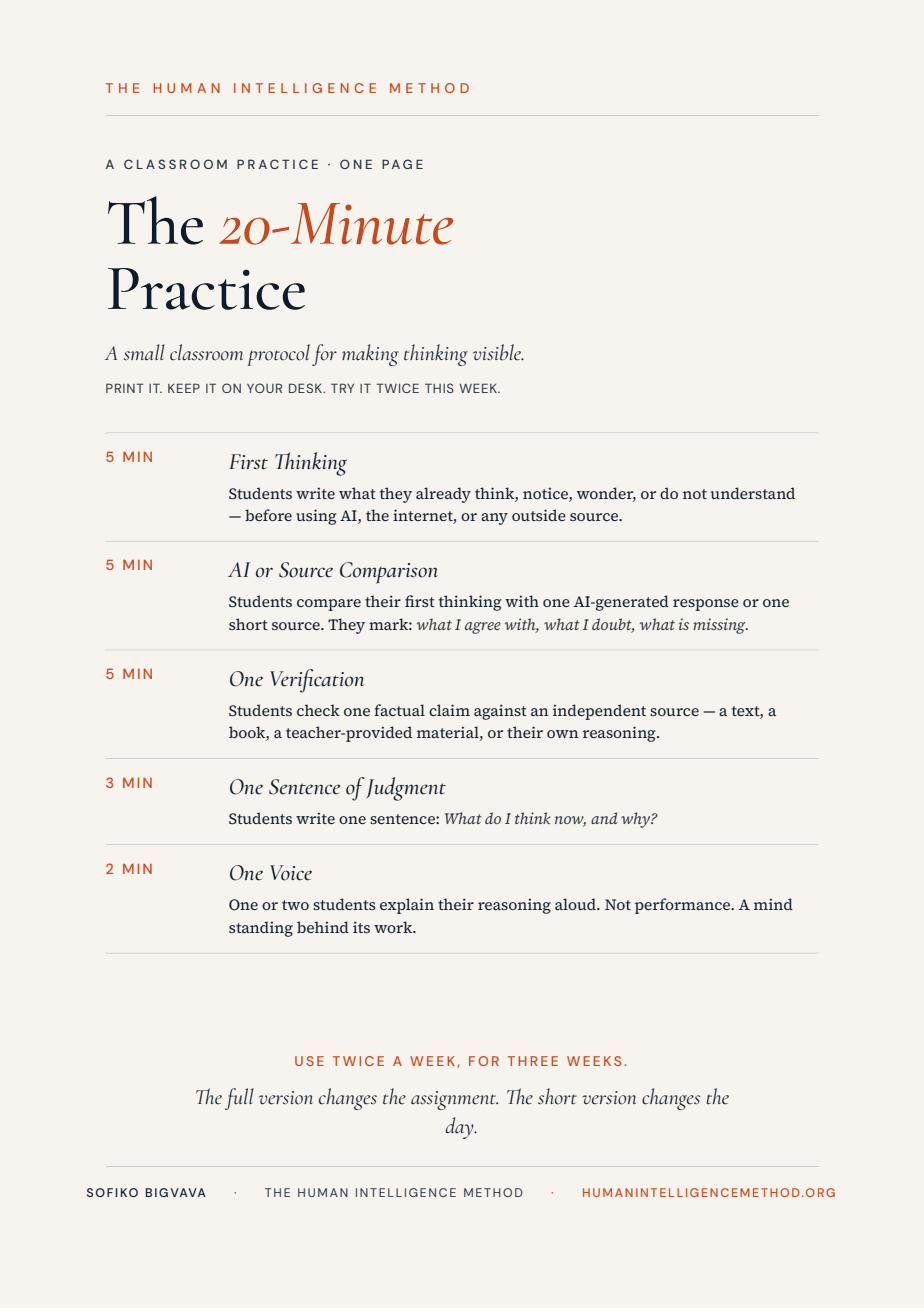
First, a founding manifesto structured in six parts — from the wrong conversation about AI, to the Five Principles of the Method, to a redesigned Marie Curie assignment, to the Twenty-Minute Practice that can fit inside a single class period.

Second, a public infrastructure for the method: a dedicated website, a manifesto distribution funnel, a one-page classroom practice, and an editorial voice that allows the idea to live, spread, and develop over time.

Third, a founding application-based cohort: thirty educators working in real classrooms over four weeks, using the method on their own assignments, with their own students, and helping refine it through practice.

Everything is designed for one purpose: to give educators a clear position to stand on, and a working method to act from.

What changed

The Human Intelligence Method now exists as a public framework for a problem many schools are facing but few can yet name clearly.

Educators, school leaders, and curriculum designers can read it, apply it, and join the first cohort building it further.

Of all my work, this is the layer where the position itself lives — not how an institution looks, not only how it operates, but what education is still responsible for when answers become instant.

It is also the clearest expression of my work as an Education Systems Architect: I build systems that protect what must remain human inside education.

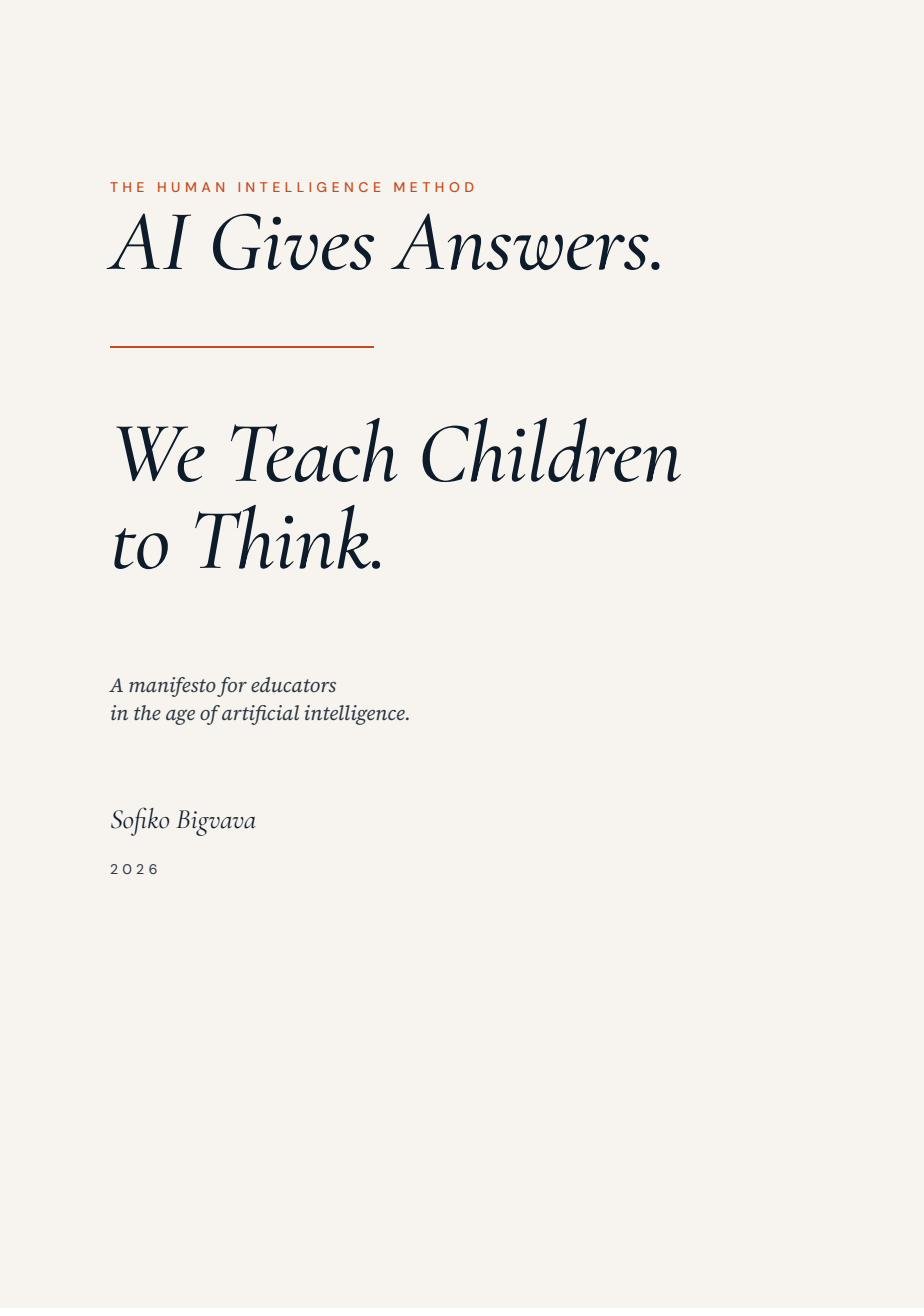
The Human Intelligence Method — manifesto cover: 'AI Gives Answers. We Teach Children to Think.'
The manifesto · cover
The 20-Minute Practice — a one-page classroom protocol for making student thinking visible.
The 20-Minute Practice · classroom protocol

Three institutions. One way of working. Coherence held all the way through.

SB · Tbilisi · 2026